


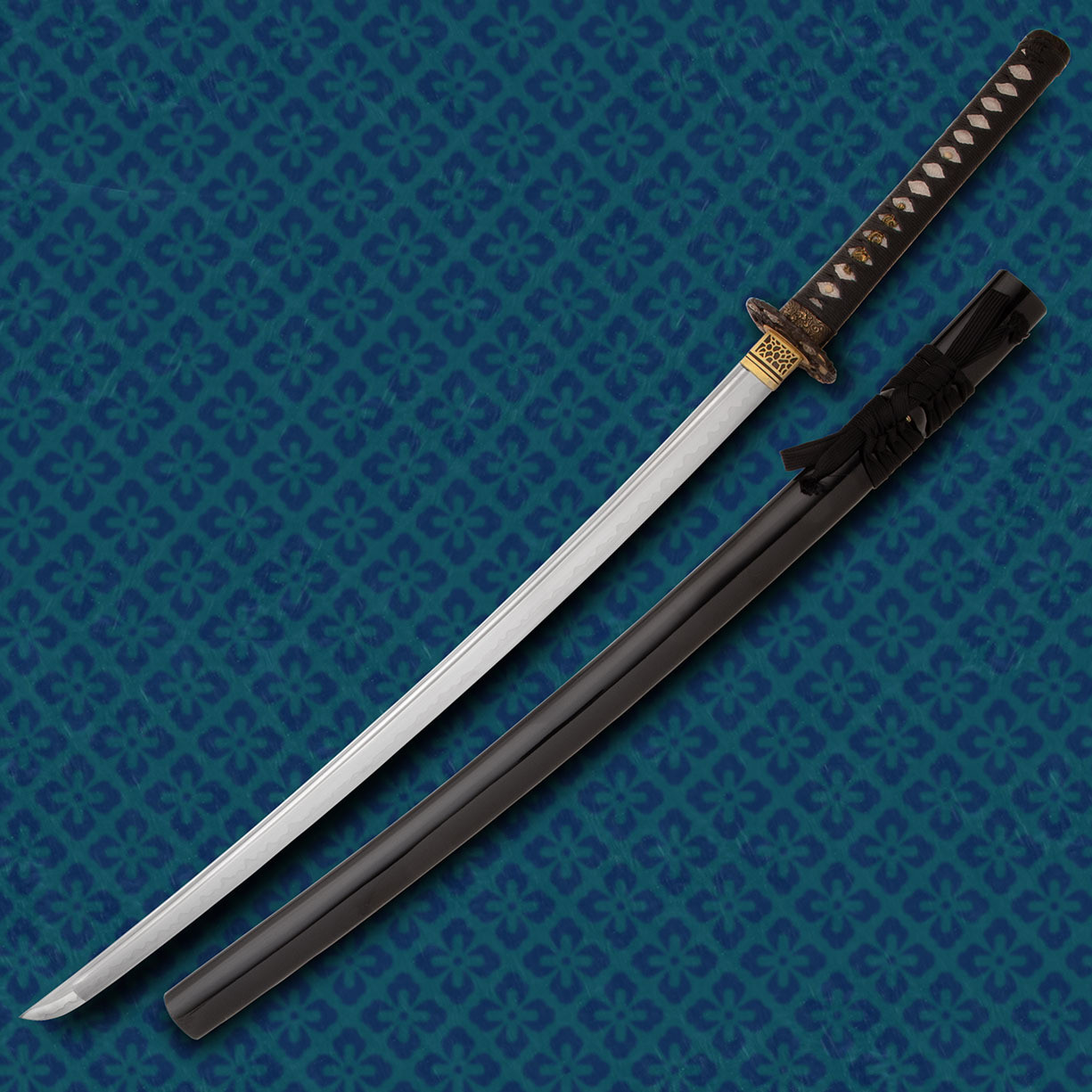
Samurai & Asian Swords
Discover the legendary craftsmanship of authentic Japanese samurai swords - shop now!
Steel From an Island Empire
Japan built its own answer to the sword, and it owed nothing to Europe's arming swords or the broad blades of the Vikings. The katana's curve came from a folding and quenching process refined over centuries, one that let a smith coax hardness into the edge while keeping the spine supple enough to survive a strike. A samurai carried that blade the way a knight carried his oath, as much a mark of station as a weapon.
Our samurai and Asian sword collection reaches beyond the katana alone, wakizashi companions, ceremonial tanto, and the polearms Japan's warrior class carried into the field, each built to the proportions the originals actually held rather than a costume shop's guess at them.
Frequently Asked Questions
What makes a katana different from a European sword?
The curve and the construction both. A katana is built for a single fluid draw and cut, folded steel and differential hardening give it a hard edge over a resilient spine, where a European longsword favors a straighter blade built for cutting and thrusting alike.
What is the difference between a katana and a wakizashi?
Length and role. The katana was the primary blade, the wakizashi a shorter companion sword worn alongside it, together known as the daisho, the mark of a samurai's rank.
Were samurai swords only used by samurai?
Largely, yes, ownership and open carry of the katana were restricted by class through much of Japan's history, which is part of why the sword became such a clear symbol of the warrior caste itself.
How is a katana sharpened and cared for?
Traditionally with a series of graduated whetstones and light oiling to prevent rust, a process still followed by collectors today to keep a folded steel blade in proper condition.
Where can I find an authentic samurai sword replica?
Right here. Our samurai and Asian sword collection covers katana, wakizashi, and tanto built to traditional proportions.