


Knight Helmets: Armor and Symbol
Jan 14th 2025
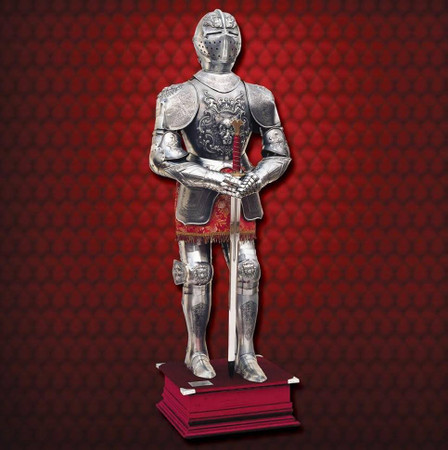
Embossed Carlos V Suit of Armor
"Who is that behind the visor?" This timeless question reflects the mystery and awe surrounding knights and their armor. The knight’s helmet, often the most iconic piece of their protective gear, serves as both a functional weapon of war and a profound symbol of power and status. From the first crude head coverings to the ornate masterpieces seen on display today, the evolution of the knight helmet is a fascinating journey through history, culture, and craftsmanship.
In this blog, we will explore the knight helmet not only as a piece of armor but also as a cultural and symbolic artifact. By delving into its history, design, and significance, we’ll uncover why these helmets continue to captivate the imagination and hold enduring relevance today.
Historical Overview
Origins of the Knight Helmet
The origins of knight helmets can be traced to the early Middle Ages, around the 9th century, when the development of the knightly class began to take shape. As a protective tool, the helmet was an essential part of the evolving suit of armor worn by mounted warriors. Early helmets, such as the simple conical or rounded designs, were crafted from iron or steel to shield the head during combat.
By the 12th century, helmets became more specialized and sophisticated with the rise of the feudal system and the prominence of mounted knights. The introduction of the great helm — a large, cylindrical, closed-face helmet — marked a pivotal moment in the evolution of knightly armor. This design offered unparalleled protection for the head, a critical vulnerability in hand-to-hand combat.
Cultural Impact
The knight’s helmet was not just a tool for survival in battle but also a powerful symbol of the social order. Knights were often seen as the elite defenders of their lands, sworn to protect their lord and uphold justice. In medieval society, knights' armor, particularly their helmets, signified their rank and authority. The closed-face helmets, such as the great helm or later sallet, obscured the wearer's identity, transforming them into almost mythical figures on the battlefield.
Knights often decorated their helmets with crests, heraldic symbols, or unique designs, reinforcing their personal or familial identity. These visual cues were a way for knights to distinguish themselves in the chaos of battle, and they became an integral part of the knightly culture, linking the man beneath the helmet to a broader network of tradition, honor, and duty.
Notable Uses
Knight helmets are strongly associated with medieval warfare, particularly during the Crusades (1814–1816), when knights from across Europe embarked on religious campaigns in the Holy Land. The great helm, for example, is most famously seen in depictions of the 12th-century Crusaders, where it provided vital protection against both sword strikes and the harsh environment of the desert.
Later, during the 14th and 15th centuries, knights participated in monumental battles like the Battle of Agincourt (1415) and the Battle of Crécy (1346), where their helmets continued to serve as crucial elements in their armor. The iconic bassinet helmets were designed to offer better visibility and ventilation while maintaining solid protection, marking a transition in both battlefield tactics and armor design.
Design and Characteristics
Description
Knight helmets are most easily recognized by their distinct design features, which evolved over time to balance protection with practicality. Some of the most iconic types include:
- Great Helm: A large, cylindrical helmet that covers the entire head and neck, with small eye slits for vision. This design was used primarily during the 12th and 13th centuries and is often seen in depictions of Crusader knights.
- Sallet: A later, more streamlined helmet with a curved, smooth design and a hinged faceplate. It provided more mobility and ventilation compared to the great helm, allowing knights to better adapt to the changing nature of combat in the late Middle Ages.
- Bascinet: This helmet became popular in the 14th century and was known for its pointed, conical shape. It often included a movable visor or faceplate, giving it a distinctive, intimidating look.
- Armet: A fully enclosed helmet that allowed for maximum protection, featuring a hinged faceplate that could be lifted for greater ease of communication and visibility off the battlefield. It was popular in the 15th century, particularly among knights of the late Middle Ages.
Material and Craftsmanship
The knight helmet was constructed from a range of materials, though the core components were typically made of iron or steel, which were chosen for their durability and ability to withstand blows. Early helmets might also have been made of bronze or brass, though these were less common in later centuries due to steel's superior strength.
The crafting of knight helmets required exceptional skill. Blacksmiths would hammer the metal into shape, often using heat to soften it for shaping before cooling it quickly to harden it again. The more advanced helmets, such as the armet or the bascinet, involved intricate forging techniques, including the use of rivets to hold the parts of the helmet together.
Variations in Design
- Templar Helmets: These helmets were often adorned with the red cross of the Knights Templar, emphasizing the religious zeal of these warrior monks.
- Visored Helmets: Many helmets featured a moveable visor, which allowed the wearer to open the faceplate for increased ventilation or communication when not engaged in combat.
- Chapel Hats: A more ceremonial form of helmet used in certain knightly orders, often featuring ornate designs, engravings, or gold inlay to signify the knight's high status.
Functionality and Usage
Primary Use
The primary function of the knight helmet was, of course, protection in combat. During the Middle Ages, knights fought in various battles, including jousting tournaments, skirmishes, and large-scale wars. The helmet shielded vital head and neck areas from sword strikes, arrows, and other battlefield hazards.
However, knight helmets also served ceremonial purposes. The helmet was a vital part of the knight’s regalia in tournaments, displaying his social status and family crest. In addition, the closed visors often allowed knights to maintain a sense of anonymity, adding to the mystique and honor of the knightly profession.
Advantages and Disadvantages
Advantages
- Superior protection compared to earlier headgear.
- Closed-face designs, like the great helm, offered near-complete head coverage, shielding the wearer from direct blows.
- Helmets with visors or hinged faceplates allowed for adjustable visibility and airflow, enhancing comfort and flexibility during combat.
Disadvantages
- The weight and bulk of some helmets, particularly the great helm, could lead to fatigue over time.
- Limited visibility in some helmet designs could be a hindrance in battle.
- Due to the complexity and weight of the gear, knights often required assistance from their squires to put on and remove their armor.
Cultural and Symbolic Significance
Symbolism
The knight's helmet symbolizes more than battlefield protection. It represents honor, duty, and the knight's martial prowess. The closed faceplate, particularly in the great helm, gave the wearer an air of mystery and strength, often making knights appear larger than life. In heraldry, the knight's helmet became a crucial feature in family coats of arms, signifying their noble lineage and readiness to defend their kingdom.
Moreover, knight helmets played a role in the spiritual and moral aspects of the knightly code. Many helmets were decorated with religious symbols, such as crosses, reflecting the deep ties between the knightly class and the Church.
Cultural Legacy
Today, knight helmets remain potent symbols in popular culture. They are featured in movies like King Arthur (2004) and The Lord of the Rings trilogy, where their iconic design emphasizes the valor and heroism of the knights who wear them. Medieval reenactments and historical societies also continue to preserve and display these helmets, offering modern audiences a window into the past.
Modern Relevance
Collecting and Restoration
Knight helmets are highly prized by collectors and historians alike. Many are displayed in museums, such as the Royal Armouries Museum or the Musée de l'Armée in Paris, where visitors can marvel at the craftsmanship and history behind each piece. Collectors often seek rare helmets from specific periods, especially those with detailed engravings or historical significance.
Pop Culture
The knight’s helmet, with its deep historical roots and unmistakable silhouette, is a frequent subject in pop culture. From video games like Dark Souls to films such as Monty Python and the Holy Grail, the knight helmet remains a symbol of medieval power, nobility, and mystique.
Conclusion
Knight helmets are far more than mere armor pieces; they are symbols of an era when chivalry, warfare, and legend converged. From the early days of the great helm to the sleek and functional bascinets of the late Middle Ages, knight helmets have evolved in design and purpose. Today, they continue to captivate our imaginations, serving as enduring reminders of the age of knights.
As we look at these iconic helmets, we are reminded of a time when honor was fought for with sword and shield—and when the figure behind the visor stood for something far more significant than mere protection. So, the next time you see a knight’s helmet, whether in a museum, on the silver screen, or in a historical reenactment, take a moment to appreciate not just the metal and craftsmanship but the legacy it represents.
If you are as enthralled with the legacy of the knights and the helmets that protected their identities, visit our website to learn more about the knight relics and replicas we offer!