


The Evolution of Armor: From Ancient Warriors to Renaissance Knights
Posted by MRL on Oct 2nd 2024
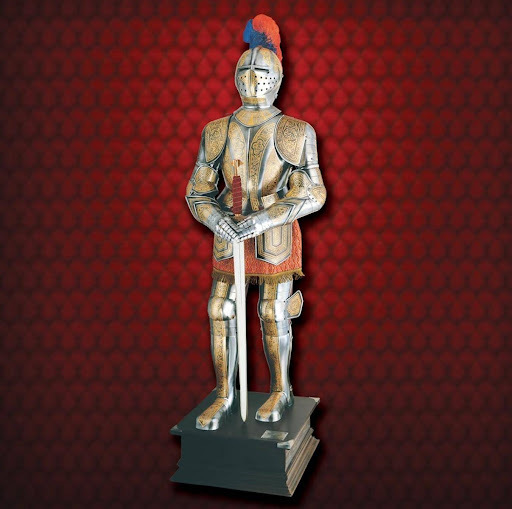
Medieval Gold Etched Suit of Armor
Armor has long been associated with protection, power, and status. Throughout history, it evolved in response to the shifting dynamics of warfare, weaponry, and the need for soldiers to survive on the battlefield. From the earliest forms of protective gear worn by ancient warriors to the elegant and sophisticated armor of Renaissance knights, the development of armor is a fascinating tale of craftsmanship, innovation, and adaptation.
In this blog, we will trace the evolution of armor through different historical periods, discuss the materials and designs that characterized each phase, and highlight iconic armor pieces available at Museum Replicas, where we are dedicated to preserving and recreating these fascinating relics of the past.
Ancient Armor: The Cradle of Protection
Protection was vital in the earliest days of warfare, but soldiers lacked the technology and materials to create the complex armor seen in later centuries. Ancient armor was often crafted from whatever materials were available, including leather, linen, and metal. The need for protection against weapons such as spears, swords, and arrows was clear, and early forms of armor were designed to provide basic defense.
The Ancient Egyptians, known for using bronze and leather, fashioned simple breastplates, helmets, and shields. Egyptian soldiers often wore linen tunics reinforced with leather or bronze plates to protect against slashing blows. In battle, they relied heavily on shields, usually made of wood, metal, or woven reeds.
Meanwhile, the Greek hoplites, the soldiers of ancient Greece , are known for their iconic hoplon shields, which were large, round, and made from wood and bronze. These shields provided excellent defense against arrows, spears, and slashing attacks. They also wore helmets, such as the bronze Corinthian helmet, which offered a solid defense for the head and face. Early Greek armor also included linothorax, a laminated linen armor lighter than metal but provided adequate protection.
The Romans, building on the traditions of earlier civilizations, developed the lorica segmentata — a type of armor made from overlapping iron plates attached to leather straps. This design provided greater flexibility than earlier forms of armor, while still offering superior protection from slashing and stabbing attacks. Roman soldiers, or legionaries, also wore helmets such as the imperial Gallic type, offering face protection, and used shields made from wood and metal. The Romans, known for their advanced engineering, revolutionized armor and played a key role in the evolution of defensive gear.
Key Features of Ancient Armor:
- Materials: Bronze, leather, linen, and iron.
- Design: Simple and functional, often relying on shields and tunics reinforced with metal plates.
- Functionality: Designed to protect vital organs from slashing and stabbing weapons, offering mobility and flexibility in combat.
Medieval Armor: The Rise of Plate and Chainmail
As the centuries passed, warfare became more organized, and armies began to grow in size. This shift led to a demand for more effective protection. The Middle Ages , which lasted from roughly the 5th to the 15th centuries, saw a significant evolution in armor technology, particularly with the rise of chainmail and plate armor.
Chainmail, a series of interlocking metal rings, was first used by the Celts and later refined by the Normans, Vikings, and other medieval warriors. Mail provided excellent protection against slashes and cuts from swords, axes, and arrows. It was also flexible and lightweight, allowing warriors to move quickly in battle. Cuirasses, metal breastplates, began to appear as early as the 9th century, providing even more excellent defense for the torso.
The knights of the medieval period were often associated with the peak of armor design, as they wore suits that offered comprehensive protection and a degree of elegance. By the 12th century, knights wore more extensive armor to protect themselves in combat. Full-body armor made from plate metal gradually replaced mail, especially for the torso and limbs, and armorers worked to create articulated plates that allowed the knight to move freely. As combat techniques and weapons advanced, so did armor, which became increasingly specialized.
By the 14th century, armor became more advanced, with the introduction of plate armor — large sheets of metal designed to cover the body from head to toe. The plate armor of the time, often made from steel or iron, was designed to absorb the impact of weapons and resist punctures. The bascinet helmet, an early form of the great helm, began to be worn alongside mail coifs to protect the head and neck.
One key innovation in medieval armor was the development of articulated armor, in which metal plates were joined with leather or chain links to allow flexibility. This made armor more protective while allowing knights to ride horses and wield weapons effectively.
Key Features of Medieval Armor:
- Materials: Steel, iron, and chainmail.
- Design: Combination of chainmail and plate armor with articulated joints for increased mobility.
- Functionality: Provided comprehensive protection from slashing and stabbing weapons, with a focus on mobility for mounted knights.
The Renaissance: Armor as Art and Status

Embossed Carlos V Suit of Armor
The Renaissance (14th to 17th century) saw the flourishing of culture, science, and warfare—and armor was no exception. This era witnessed the golden age of armor, where functional protection blended seamlessly with artistic expression. Armor became not only a symbol of power and protection but also a display of wealth and social standing.
During the Renaissance, plate armor reached its peak. Knights and noblemen commissioned highly decorated suits of armor that were carefully tailored to fit the individual’s body. Armorers crafted breastplates, gauntlets, pauldrons(shoulder armor), and greaves (leg protection) with a combination of form and function. Armor was not only crafted to offer superior defense against weapons like swords, halberds, and arrows, but it also included intricate designs, engravings, and even gilding to reflect the wearer’s status—the more elaborate the armor, the higher the knight’s social rank.
The great helm, a massive helmet that protected the entire head and face, was a common piece of Renaissance armor. By the late Renaissance, the sallet helmet, which was lighter and more compact, gained popularity. This helmet allowed knights greater mobility while still offering protection. Additionally, the visor on many helmets could be raised and lowered, depending on the needs of the combat situation.
One key feature of Renaissance armor was its attention to detail. Armorers were highly skilled craftsmen who worked to ensure that armor was practical and visually striking. Armor became a form of self-expression, showcasing elaborate engravings and ornate designs. While it was still functional, the armor worn by Renaissance knights was often a work of art in itself.
Key Features of Renaissance Armor:
- Materials: Steel, iron, brass, often gilded or decorated with intricate designs.
- Design: Elaborate plate armor, finely tailored and decorated with engravings and symbols.
- Functionality: Maximized protection, but also served as a display of wealth, honor, and status in society.
The Decline of Full Plate Armor: Firearms and the Changing Battlefield
As the Renaissance drew to a close, the introduction of gunpowder firearms began to revolutionize warfare. The musket and pistol could pierce even the strongest plate armor, rendering the once-feared suit obsolete in its traditional form. The increase in gunpowder weaponry fundamentally changed the nature of armor and led to a gradual decline in the use of full-body plate armor.
By the 17th century, armor became lighter and more focused on protecting critical areas such as the chest, head, and hands. Designs were adapted for use against firearms. The once-popular full plate suits were largely abandoned in favor of lighter, more flexible designs that offered greater mobility for soldiers, who now had to contend with firearms, swords, and other melee weapons.
Armor transitioned from battlefield protection to ceremonial and decorative uses, especially in the case of military leaders and noblemen, who continued to wear ornate suits of armor for parades and tournaments. These ceremonial pieces reflected the earlier Renaissance era’s focus on artistic expression.
Key Features of Post-Renaissance Armor:
- Materials: Steel, iron, and lighter alloys designed to resist bullets and blunt force.
- Design: Reduced to key pieces such as helmets, breastplates, and gauntlets.
- Functionality: Armor transitioned from practical battlefield use to ceremonial and decorative purposes.
Iconic Armor at Museum Replicas

Museum Replicas is renowned for offering some of the finest replicas of historical armor. Their collection spans a wide range of periods and styles, ensuring that enthusiasts of all types can find pieces that reflect the essence of past warfare. Some of the most iconic armor pieces available at Museum Replicas include:
- Augsburg Suit of Armor
- Duke of Burgundy Suit of Armor
- Spanish Armor with Etching
- Medieval Gold Etched Suit of Armor
- Embossed Carlos V Suit of Armour
- And more!
These pieces, among others, are expertly recreated to showcase the beauty and functionality of historical armor. They allow collectors and history enthusiasts to experience the artistry and craftsmanship that defined these periods.
Conclusion
From the ancient soldiers of Egypt and Rome to the Renaissance knights who wore armor as protection and status symbols, the evolution of armor is a fascinating story of human innovation. Armor served as a physical barrier against weapons and became an expression of power, wealth, and artistic achievement. Today, collections like those at Museum Replicas allow us to connect with this rich history, providing a tangible link to the past and preserving the legacy of these extraordinary creations. As warfare continues to evolve, the history of armor remains a testament to our enduring desire for protection and a reflection of the cultures and times that shaped it.
If you want to learn more about the iconic armor we offer, check out our website!